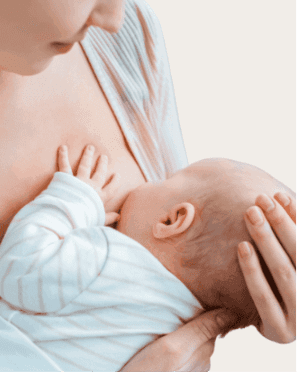
Dryness, irritation, discomfort and Urinary issues?
It has a name, ‘Genitourinary Syndrome of Lactation’
There is a pattern I keep seeing in my office…
Moms come in a little embarrassed, almost apologetic about what they are about to say: dryness, irritation, discomfort during intimacy, urinary urgency that showed up out of nowhere. And almost every single one of them says the same thing, I thought it was just me.
There’s a pattern I keep seeing in my office: moms describing breastfeeding vaginal dryness, irritation, discomfort during intimacy, and urinary urgency that showed up out of nowhere. Breastfeeding vaginal dryness like this isn’t rare. It has a name, and it’s not just you.
But what is Genitourinary Syndrome of Lactation?
GSL is a condition that affects breastfeeding women who are, hormonally speaking, in a temporary menopausal state. During lactation, the body produces high levels of prolactin to sustain milk production. Prolactin actively suppresses estrogen, a shift that’s intentional and necessary for breastfeeding.
Estrogen does more than regulate your cycle. It maintains the thickness, elasticity, and lubrication of the vaginal and vulvar tissues. It also supports the urinary tract lining and plays a direct role in bladder control and pelvic floor function.
When estrogen drops, all of that changes. The vaginal walls thin and lose elasticity. Natural lubrication decreases. The tissues become more fragile and more prone to irritation. The urethra and bladder lining also depend on estrogen, so they become more sensitive too. This is why urinary urgency, frequency, and recurrent UTIs are so common in breastfeeding women and so rarely connected back to GSL.
Research suggests that up to 87% of breastfeeding women experience at least one symptom. Dryness and irritation are the most reported. But pain during sex, a feeling of pressure or rawness, and urinary leakage are just as real and just as common. Most women never connect these symptoms to breastfeeding. Most are never told to expect them.
Why does nobody talk about it?
Postpartum care in this country is notoriously rushed. The standard six-week visit is often the only formal checkpoint between birth and the rest of a woman’s life. In that window, the focus rarely lands on how she feels in her own body. Add the cultural conditioning that tells women to push through discomfort and move on, and you get a condition that stays invisible , simply because no one creates the space to name it.
Even within medicine, GSL is underrecognized. The American College of Obstetricians and Gynecologists only formally defined and named it in 2014. That means an entire generation of providers trained without ever learning to screen for it proactively. A 2019 study published in the Journal of Midwifery and Women’s Health found something telling: doctors asked fewer than half of postpartum women about genitourinary symptoms at their follow-up visits. The symptoms exist. The conversation just never happens.
What GSL actually feels like (because nobody describes this part).
Every woman experiences it differently, and that’s part of why it goes unrecognized for so long. Some women describe a raw, burning sensation that makes wearing underwear uncomfortable. Others notice that intimacy feels completely different, not just less comfortable, but painful in a way that feels wrong and confusing, especially when everything else about postpartum recovery seems on track.
Some women develop what feels like a chronic UTI that keeps coming back. It’s not an infection, low estrogen inflames and irritates the urethral tissue instead. Others experience urgency: a sudden, overwhelming need to get to the bathroom. They chalk it up to having recently been pregnant, when in reality, it’s a direct symptom of GSL.
If you recognize yourself in any of this, that recognition matters.
The good news
You do not have to wait until you stop breastfeeding to feel better.
Low-dose vaginal estrogen is the most well-studied and effective treatment for GSL. You apply it locally as a cream, ring, or suppository. Systemic absorption is minimal, meaning it doesn’t significantly affect breast milk composition or infant estrogen levels, according to current evidence from both the Academy of Breastfeeding Medicine and the American College of Obstetricians and Gynecologists. Most women notice meaningful improvement within four to six weeks of consistent use.
For those who prefer non-hormonal options, vaginal moisturizers can help. Used regularly, not just during intimacy, but two to three times per week as a baseline, they restore hydration to the tissue over time. Hyaluronic acid-based formulations have shown results comparable to low-dose estrogen for mild to moderate symptoms in several studies, making them a genuinely effective starting point. Lubricants used during intimacy reduce friction and discomfort in the moment, but they don’t treat the underlying tissue changes the way moisturizers do. Both have a role. They are not interchangeable.
Pelvic floor physical therapy is one of the most underutilized tools in postpartum care. A trained pelvic floor therapist can address the muscular and connective tissue changes that GSL accelerates, for urinary symptoms, pain with intimacy, or a sense of pelvic pressure. It’s not just for severe cases. It’s for any woman who wants to feel like herself again.
Ospemifene is an oral selective estrogen receptor modulator. It’s another option for women who prefer not to use vaginal estrogen, though it’s less common in actively breastfeeding women. Worth discussing individually with your physician.
What to do next?
Any of this sounds familiar? bring it up at your next appointment. Write it down beforehand if you need to, research consistently shows that women who don’t name the symptom out loud rarely get help for it. You are not being dramatic or overreacting. You are describing something real, with a clinical name, established treatments, and a physician who is ready to take it seriously.
GSL resolves on its own once breastfeeding ends and estrogen levels recover. That timeline is different for every woman. But there’s no reason to spend months uncomfortable when effective options exist right now.
You deserve to feel good in your body. Not eventually. Now.
The Bottom Line on Breastfeeding Vaginal Dryness
Are you dealing with breastfeeding vaginal dryness, irritation, or unexplained urinary symptoms? it has a name, a cause, and real treatment options. You don’t have to wait it out.
I made a video talking about this topic just for you! Take a look at my Instagram reel about #GSL

Be the first to comment